
Growing and Sowing Coneflower
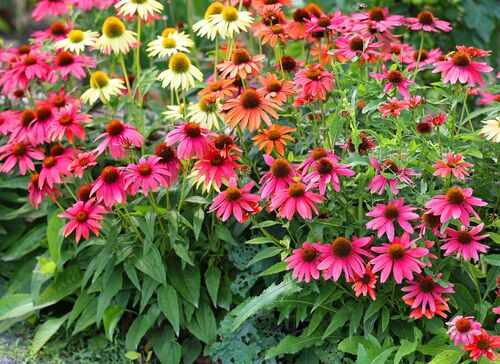
The coneflower originates from the vast prairie regions of North America. There, centuries ago, the plant was already discovered and used by the indigenous population for its powerful medicinal properties. The Latin name is Echinacea. This word is derived from the Greek 'echinos', which means 'hedgehog'. The plant owes this name to the prickly, raised center of the flower, which resembles the back of a little hedgehog after blooming. The most famous purple variant is officially called Echinacea purpurea. Most coneflower species are perennial plants.
Sowing coneflower seeds
For optimal results, sowing should take place indoors under glass from February to March, after which the young plants can be moved outdoors from May. Sowing directly into the open ground is possible between April and July in a sunny spot with a planting distance of approximately 35 x 35 cm. With an early start, blooming often occurs in the first year, whereas with later sowing, the plant is transplanted in late summer to return vigorously the following season, provided it is a perennial species.
Direct to the Coneflower Seeds >
The best position and soil for the coneflower
For healthy growth and abundant blooming, a spot in full sun is essential. The coneflower thrives best in a nutrient-rich, well-draining soil that does not stay too wet in winter. A calcareous or humus-rich soil is preferred, but the plant is robust enough to adapt to various soil types, provided there is sufficient sunlight.
How to care for your coneflower plants
Caring for the coneflower is simple, as the plant is very robust. During dry summer periods, regular watering is important, but prevent the roots from sitting in waterlogged soil. For an extra abundant bloom, faded flowers can be removed; however, if left on the plant, the dried cones form a beautiful silhouette in winter and a food source for birds. In spring, a small application of organic fertilizer is sufficient to stimulate the growth of this strong plant.
Is coneflower bee and/or butterfly friendly?
The coneflower is an absolute favourite among pollinators and is therefore often labelled as one of the most bee- and insect-friendly plants for late summer. The large, open flowers with their prominent centres are packed with nectar and pollen, making them an indispensable food source for bees, bumblebees, and butterflies. By planting the coneflower, an active contribution is made to the biodiversity in the garden. The flower can also be used as a cut flower.
Coneflower in the vegetable garden
The coneflower is an excellent addition to a kitchen garden. Besides its well-known medicinal properties — the plant is renowned for boosting resilience and supporting the immune system — it plays an important role in the garden's ecosystem. The flowers attract beneficial pollinators and natural pest controllers, which promotes the health of surrounding crops.
Is coneflower edible and/or medicinal?
The coneflower is very well known as a natural remedy. The roots and petals in particular contain substances that stimulate the production of white blood cells. This helps the immune system fight off infections and colds more quickly. It is most commonly used in the form of tea, tincture, or extract. Although the plant is non-toxic, it is not actually eaten as a 'vegetable'. The young petals have a slightly bitter, herbal flavor and can be sprinkled over a salad as a colourful garnish. The center of the flower is too hard and prickly to eat.
Please note, we at Dutch Garden Seeds do not give medical advice. Always ask a professional if and how the plant can be used medicinally.
Coneflower seeds in our collection
We offer various types of coneflower seeds in our product range, including organic seeds from the brands 'Buzzy Organic Seeds' and 'de Bolster'.
Tips for sowing coneflowers
- Support the plants to prevent them from falling over.
 Free shipping on orders with seeds above € 40,-