Growing and Sowing Globe Thistle
The globe thistle (Echinops) is a wonderful addition to any garden. With its perfectly round, steel-blue flower heads and characteristic, spiky foliage, this perennial instantly adds structure and depth to the border. The plant attracts many bees and butterflies, continues to bloom into late summer, and grows exceptionally well in dry, sunny spots. The globe thistle fits into almost any garden and actively contributes to local biodiversity.
Sowing and growing globe thistle
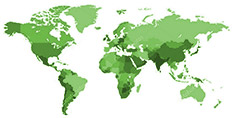
The globe thistle (Echinops) is native to the dry, rocky regions of Central and Southern Europe, Central Asia, and the mountainous areas of tropical Africa. The botanical name, derived from the Greek echinos (hedgehog) and ops (appearance), directly refers to the distinctive, spiky inflorescences. The plant is extremely drought-resistant because it develops a deep taproot. Despite its southern origins, the globe thistle is exceptionally hardy.
Sowing globe thistle
Indoor sowing can be done as early as March or April in pots at a temperature of around 20 °C. Because the seeds require light to germinate, press them only lightly onto the seed-starting mix and cover with a paper-thin layer of soil. After two to three weeks in slightly moist soil, the first seedlings will appear, which can be planted into the open ground from mid-May with a spacing of 35 to 50 centimetres. Direct sowing outdoors is also possible, preferably from May to mid-June. The globe thistle is a perennial that uses its energy in the first year to establish roots; the characteristic steel-blue flower heads will not appear until the second year.
Position and soil for Globe Thistle
To develop its deep blue flowers, the globe thistle requires plenty of direct sunlight. A location in full sun is therefore essential. The globe thistle prefers a dry to moderately moist soil that is lime-rich, nutrient-poor, and, above all, very well-draining, such as sandy or rocky soil. Excessively nutrient-rich or overly wet soil should be avoided, as this causes weak stems and can lead to root rot in winter. Thanks to its deep taproot, the plant is exceptionally resistant to prolonged drought, meaning additional watering is rarely necessary once the plant is established.
How to care for your globe thistle plants?
The globe thistle requires hardly any care. Additional watering is only necessary during extremely prolonged drought in summer. Due to its preference for poor soil, fertilization is unnecessary. In fact, too many nutrients lead to excessive foliage growth and weak flower stalks. In autumn, the decorative, faded seed heads can be left on the plant to feed birds. Not until early spring, around March, should the entire plant be pruned back to just above the ground.
Is globe thistle bee and/or butterfly friendly?
The globe thistle makes a significant contribution to garden biodiversity and attracts a great number of insects. The flower heads, which consist of hundreds of tiny florets, are rich in nectar and pollen. This makes the plant an important food source for bees, bumblebees, and butterflies during the summer. Even after blooming, the plant retains its value, as birds love to eat the ripe seeds in autumn.
Globe thistle in the vegetable garden
Thanks to its tremendous attraction for bees and bumblebees, the plant helps pollinate other crops, such as zucchinis and beans. Furthermore, it attracts beneficial insects that combat pests like aphids. Due to its deep taproot and substantial size, the plant is best positioned at the edge of the vegetable garden. This prevents it from shading out annual vegetables or interfering with them underground.
Is globe thistle edible and/or medicinal?
Although the globe thistle is primarily grown as an ornamental plant, extracts from the roots and flower heads of specific species are used in parts of Asia and Africa for their anti-inflammatory and antibacterial properties. However, the plant is less suitable for human consumption; although young parts are theoretically edible once the prickles are removed, the taste is mediocre and the texture is too fibrous.
Please note, we at Dutch Garden Seeds do not give medical advice. Always ask a professional if and how the plant can be used medicinally.
Globe thistle seeds in our collection
We offer globe thistle seeds from the brand 'Buzzy Seeds' in our product range.
Tips for sowing Globe Thistle
- Combine the globe thistle with plants that share the same dry, sunny requirements, such as coneflower (Echinacea), ornamental grasses, anise hyssop (Agastache), or yarrow (Achillea).
- Take the final width into account when planting; the plant can become quite bushy and quickly crowd out smaller plants.
- If too many young globe thistles appear in the garden, the flower heads must be cut off immediately after blooming in September, before the seeds ripen and blow away.
- Prevent falling over by proactively placing a plant support in spring.
 Free shipping on orders with seeds above € 40,-